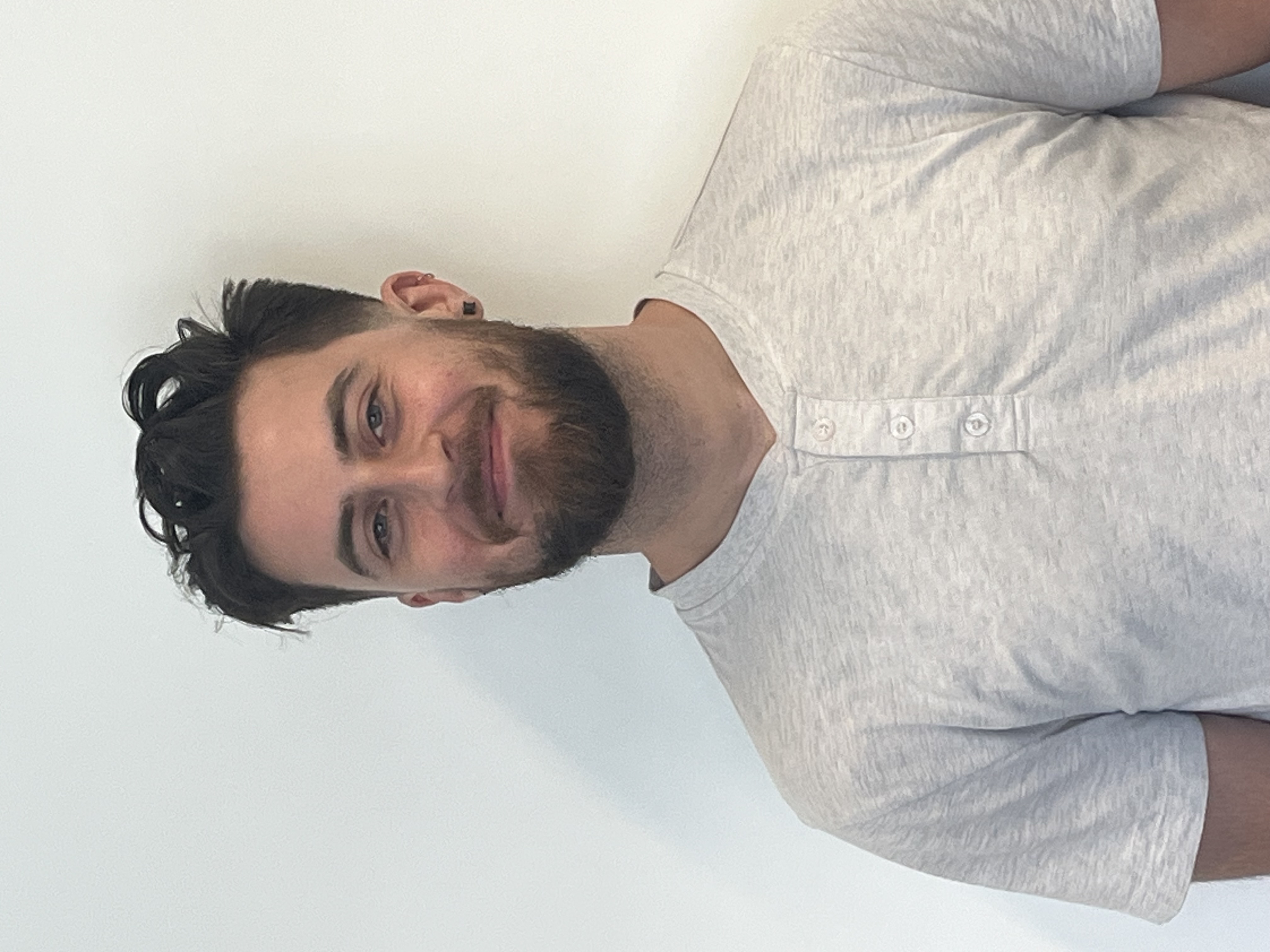
I just got back from an extended nordic vacation where I visited Stockholm, Gothenburg, and Oslo. This was all on the back of an invitation I received from a collaborator to visit the Nordic Institute of Theoretical Physics (NORDITA) so we could push a couple of the projects we have going on currently. I of course also used the visit as an opportunity to make new connections and to scout the place for a potential postdoc in the coming years.
It was my first time visiting Scandinavia, which has been on my bucket list for a long time, and I was particularly impressed by the laid-back atmosphere of Sweden and Norway. The people I encountered were all very friendly and there was a real sense of life enjoyement among them (possibly due to the saunas littered everywhere). All three of the cities I visited had ample green space and major waterfronts, which was reminiscent of my hometown Toronto that resides on one of the great lakes: lake Ontario. They also had 7-eleven stores everywhere - another after school and late night delicacy that I grew up with in Canada - which seems to be uniquely a Scandinavian thing as far as Europe is concerned since I have not been able to find them anywhere else in my travels throughout Europe. To savour the moment I bought a 7-eleven sweater that I probably do not need but nostalgia is a powerful force let me tell you.
Stockholm in particular is like this lake archipelago sandwiched between two large land masses, with each area having its own charming personality. Upon my initial arrival in Stockholm, I explored the Norrmalm district, which is where the central train station T-centralen is located. One thing that immediately stands out to you if you take the metro is just how unique some of the stations are, with huge custom artworks by Swedish artists covering the walls. I went up and down the famous Drottninggaten street with many interesting shops, stopping to buy some local Swedish chocolate; to the city hall to have a nice portside view of Stockholm’s old town, called Gamla Stan; and strolled through the King’s garden (in fact many gardens were strolled through that day). I was also inspired by the artworks I had seen earlier to visit the National Museum as well as the Moderna Museet and the rest of the Skeppsholmen island that is sandwiched between the old town and one of the larger islands where Vasa ship wreck is housed. The National Museum had a beautiful marble staircase that led into a grand multi-arched room littered with marble statues and a central fresco depicting some sort of religious scene. They had an interesting exhibit on a Swedish royal named Gustav Badin, who was a former African slave that made his way to the top - very inspiring stuff. Skeppsholmen island is packed full of character for such a small space, with a strong nautical influence and multiple hillside forts offering scenic views of the the surrounding islands, and the supposedly beloved Gröna Lund which is an amusement park in the middle of Stockholm. The island also has an artistic streak with the famous Moderna Museet, which has an unusual but striking abstract sculpture garden just outside of it. The museum itself had a lot of experimental contemporary pieces mixed in with surrealist paintings, and I was very fortunate that they had on a Picasso exhibit showcasing some of his earlier cubist work which was splendid (as usual). I managed to also visit the Medelhavsmuseet where I saw some Egyptian and Greek artifacts, and bought a pair of smart-looking hieroglyphic socks (I love socks by the way).
The next day (with great enthusiasm) I went to the island containing the Vasa shipwreck, among many other interesting museums - today was going to be a museum day. This island is massive with many places I wanted to see and so little time. I of course started with the Vasa museum, which is a museum dedicated to and actually housing the Swedish warship Vasa, commissioned in the 1600s by Swedish King Gustav II Adolf and entrusted with a mission to rescue diplomatic relations with Poland. The ship is famous for having sunk on its maiden voyage, sailing for a total of around 20 minutes before a storm knocked it over in the harbour it set sail from! This was because the designers got greedy and added too many gunports, with the bottom row being very close to sea level, meaning that the ballast had to be relatively shallow to accommodate this and thus that the ship did not have enough weight anchoring it against harsh storms. It lay at the bottom of the lake for around 350 years, preserved by the cold, low-salinity water and the lack of any weathering from actual use. When it was finally recovered in 1961 almost all of the original ship was still intact, in fact, 98% of the ship today is original material, making the Vasa the most complete example (actually one of the only surviving examples period) of ships from that time period. Seeing the Vasa in real life and up close was astounding; I finally came to appreciate the scale of these ships from all those years of watching historical films depicting naval battles. I was most enamoured with the intricacy of the carvings near the rear of the ship - where the captain’s quarters were - which depicted hundreds of detailed figures from lions to knights to mythological beings, including the king’s coat of arms. In our current days of machine-assisted work, a lot of us have lost our comprehension for the skill required to produce even a single pencil, let alone such masterworks as these carved statutes adorning the Vasa. I spent the majority of my time studying these carvings and absorbing the Vasa from several different vantage points. The rest of the museum contained artifacts recovered from the Vasa, which I perused briefly before leaving the museum. I proceeded to walk east along the northern shore towards the huge model village of Skansen, which is a representation of 20th century Sweden plus they have animals from all over Sweden there; I wanted to check out the village not the animals, since I think it is wrong to keep wild animals on display. It was interesting seeing the difference in architectural style and the way people lived back then, including what kind of food they ate and how they dressed. Many buildings had professional guides in costume that you could talk to about the theme of that particular building, and near the town centre, they had old shops where you could see how artisans went about their trade. After my visit I ventured further along the western coast, where I encountered the illustrious ABBA museum (as a huge ABBA fan I was tempted to enter but restrained my inner tourist eventually) and spent a bit more time at the Liljevalchs Konsthall, which iss a neat contemporary gallery with a wide diversity of art from different places around the world. I then continued further north, stopping by the Vrak museum of wrecks and the Viking museum, which were not as memorable as the Vasa museum but did have some interesting pieces such as some small ancient viking boats and runestones. The last stop on the island for the day was the Nordiska Museet, which is a museum dedicated to nordic living throughout the centuries, housed in a beautiful and imposing parliamentary-looking building. The standouts for me were the exhibits covering the Sámi people, which have inhabited Scandinavia for thousands of years and have their own language belonging to the Uralic language family; the evolution of Swedish home furniture; and the impact of climate change on Swedish living. I always find it cool to see what the average living room or kitchen looked like over the centuries and especially in different parts of the world. To end the day I ventured to Gamla Stan to do a bit of reconnaissance for a later visit and to find something to eat. I loved walking through the narrow cobblestone streets of Gamla Stan, with all manner of old shops and colourful houses. I even went through the narrowest street in Stockholm, which is essentially a tiny staircase wide enough for two people! My stomach finally got the better of me and I searched nearby for some food, settling on the Vegan-Vegetarian Restaurant Hermitage close to the Riddarholmen island. Vegetarian restaurants are typically the coziest places you can go, with very intimate atmospheres and extremely friendly staff that make you feel like you are in the comfort of your own home - not to mention that the food is incredible. This place was just like that, with a buffet-style menu of hearty vegetarian food and homemade iced tea to go with it. I would highly recommend this place to anyone!
The day after, I embarked on a morning cruise around some of the islands in the company of a charming local with a dry sense of humour, who happened to be our tour guide; it was a great day for a cruise with clear, sunny weather. They took us near the outskirts of Stockholm, where there were many small islands with bathing spots and cabins to relax in, and so close to the city centre too. I then took the metro to the opposite end of Stockholm to tour the UNESCO world heritage site Drottningholm palace, which is a residence of the Swedish royal family. The palace sits at the edge of the water and the palace interior is lavish (like all palaces I suppose) with brilliant mythological frescos that have a golden glow from the lighting. The palace gardens are massive compared to the palace, and I tried my best to assail them. I first went through the lake area that has small islands with isolated statues on them, then swung around to the gothic tower that lies just beyond them and had a solemnly walk through open fields where I felt in touch with the world. After my little moment I went by a nice gatehouse for the palace and then arrived at the Chinese pavilion, which was an elegant villa with asian-inspired interior and two arms giving a fantastic view over the entire palace gardens. I also stopped by the former studio of the Swedish painter Evert Lundquist - an important figure in modern Swedish painting, which was unfortunately closed until summer, but I peered through the windows to see a studio left untouched with original artworks on display. I promptly made my way through the rest of the gardens and then hopped on the metro again, where I got off around the Bromma area. I was about to head off to the city centre again when my appetite got the better of me and I stopped by this Pakistani foodtruck called Tajis foodtruck. I had this traditional Desi rice dish with salad and grilled paneer with a tandoori base soaked in creamy mango sauce. Man that was some of the most delicious food I have ever eaten, plus I got a mango drink imported from Pakistan to wash it all down. With my stomach full, I again crossed the city to the Djurgårdens on the island with the Vasa that I had been to the day before. They are a massive collection of gardens with all kinds of peaceful trails that lead through various intriguing sculptures; I spent a couple hours just waltzing around with very few people nearby, it was a nice break. There are a couple art galleries scattered near the edges of the gardens, but I was running out of time in the day, so I chose to visit the Prins Eugens Waldermarsudde on the island’s southern peninsula. It is a small but lovely gallery dedicated to the former Swedish prince Eugen, who was also a notable painter. On my way back along the northern coastline there were some elegant-looking old mansions that really transported you back to the early 20th century.
The final day before starting my research stay, I ventured back to Gamla Stan to see the rest of it and to meet my collaborator for a coffee and a stroll through some of their favourite spots. I first went to Riddarholmen island, passing the grand House of Nobility, where I had a look at the impressive 13th century Riddarholmen church and walked around the terrace to get a beautiful view of city hall. Afterwards, I scoped out the Royal Palace of Stockholm, visiting the Royal Armoury, Tre Kronor Museum, and Slottskyrkan church inside the palace. I also managed to tour the Stockholm Cathedral nearby, which is the traditional site for royal coronations and which has a striking 13th century brick Gothic look inside with a marvelous wooden sculpture of St. George and the Dragon. It was soon time to meet my collaborator, but before that I had a chance to bask in the busy but charming medieval square called Stortorget, which is where they have the christmas market each year. The Nobel Prize Museum is centrally located in Stortorget and my inner scientist compelled me to go inside. The museum is a bit of a gimmick but they have some fascinating artifacts donated by former Nobel laureates, including original manuscripts of Einstein’s general theory of relativity - this had me over the moon with excitement and single-handedly made the experience worthwhile. Einstein has been a great inspiration to me my whole life both academically and personally, drawing me deep into theoretical physics and later partially inspiring me to learn more about philosophy, with a strong relation to his intuitive and methodical way of thinking. I then promptly met my collaborator for a Swedish Fika at Kladdkakan Cafe and Bistro: a cute cafe on one of the main streets in Gamla Stan. I had a cappuccino and a traditional Swedish cardamom cinnamon bun - an unusual combination of ingredients for me but it was oh so delicious. We chatted for a bit and then ventured south towards the island of Södermalm to visit Mariaberget, which had an incredible view of Gamla Stan that we admired for some time. We continued to explore Södermalm, eventually reaching and entering the graceful hillside Sophia Church in the Vitabergsparken, which had a beautiful central mural atop the altar painted in a romantic style that we took in. We did more strolling afterwards in the direction of Gamla Stan, having lively chats about the future of technology and quantum gravity. My colleague unfortunately had to leave to take care of some things, so we parted ways at the metro stop in Slussen - a busy city hub with nice views of the waterfront. To round off the day, I then went to the Fotografiska Museum directly on the waterfront, which had an interesting variety of shots and some very thought-provoking pieces that prompted introspection and strong emotions.
NORDITA sits in the heart of the University of Stockholm campus, with a bridge linking it to the rest of the physics department. During my stay there, I was introduced to some interesting researchers working on topics ranging from quantum gravity to sphere packing. In fact, one of the researchers working on sphere packing is the grandson of one of my grandmother’s closest friends; what a small world! We enjoyed a few donuts while we chatted for the first time, about family, research, and cool things to do in Stockholm. On one of the days the well known experimentalist from IQOQI Wien - Markus Aspelmeyer - was visiting the university and my collaborator had scheduled a meeting with him, along with a few other people from the group of Magdalena Zych, to talk about some of our research. It was fascinating listening to everyone there.
The main project that my collaborator and I worked on was this idea of getting a reinforcement learning agent to perform quantum information tasks that were implicitly embedded in spacetime, and have the structure of spacetime appear in the agent’s memory after training. I wont go into the complexity associated with the term “agent,” but you can roughly think of it as something embedded in a world that can interact and influence this world, and which has the capability to make choices concerning its actions. This agent we envision has no prior understanding of what spacetime is nor do they see the connection to the abstract quantum information task: they start out blindly exploring, eventually mastering the task by building a representation of the spacetime structure that the environment is embedded in. The other project we worked on was related to contextuality in quantum field theory. I also delivered a talk that week on my prior work titled “Universal Quantum Computer from Relativistic Motion,” which essentially shows that given the right conditions, one can assemble a universal set of quantum gates from the interaction of a number of qubits moving through spacetime and a relativistic quantum field. The talk went well (at least I thought so) and there was quite a bit of engagement from the audience. Many of the audience members joined for the lunch afterwards, where I had some really stimulating conversations on the philosophy of quantum gravity and spacetime emergence.
Outside of work I spent most of my time hanging out with some of the master’s and PhD students from NORDITA. We spent many hours discussing and debating in pubs, the complexities of the world, and shared many laughs together too. On the last evening we went to the pub we frequented the most and my collaborator - who was by this point best friends with one of the bartenders - got them to give us a table in the back despite the place being packed with students. It turns out that the table was directly across from a big private retirement (or maybe it was a birthday?) celebration, which was slightly awkward given that we were the only people not part of it. My collaborators boss also joined us that evening for a few beers and we had some interesting conversations about AI and spacetime emergence.
I also managed to visit the Stockholm opera house one evening to catch a performance of Madama Butterfly by Puccini, which is based on a short story and originally premiered in New York in 1900. The opera house is located just across the bridge from the parliament building, in a lovely little square called Gustav Adolfs torg. I arrived just on time for the performance, wearing my opera outfit of a grey blazer with a white dress shirt and navy blue dress pants that I have worn to every opera I have ever seen (it is tradition now), but I got lost initially and one of the staff had to escort me to my seat. The interior was quite lavish with a gorgeous ceiling and grand chandelier, and the performance was fantastic. I knew Madama Butterfly was a Puccini opera - quite a famous one at that - so it was bound to be excellent. Indeed it was, and I had not read the plot synopsis beforehand, so I was surprised to find the opera in the modern setting of early 1900s Japan. The opera is in three acts (the premiere had only two acts but due to poor reception, Puccini decided to split the last act into two) and follows the story of a young girl named Cio-Cio-San, known affectionately as “Butterfly,” and a US naval officer named Pinkerton. It starts out with Pinkerton visiting Nagasaki to marry Butterfly for convenience because he plans to leave her once he finds an American wife, and since Japanese divorce laws are not strict. They have their ceremony and first night together, then Pinkerton leaves to America for many years. The second act is essentially Butterfly waiting for Pinkerton to return while rejecting all attempts by her maids and townspeople to marry her to another person. It culminates with Pinkerton’s promise to return after the reveal that Butterfly gave birth to his son. Once Pinkerton has arrived with his new wife to retrieve the child, the enthusiasm of Butterfly makes him regret his decisions and the ensuing chaos results in Butterfly taking her own life.
After my research visit in Stockholm I took the train across southern Sweden to Gothenburg and stayed there for about two days. Although not as vibrant a metropolis as Stockholm, Gothenburg still has some interesting history and spots. I particularly enjoyed my wanderings through the old town - stopping at some beautiful churches, the lovely Gothenburg cathedral, some upscale markets, and the park that wraps around the perimeter - as well as my journey down Kungsportsavenyen to the Gothenburg Museum of Art and my visit to the Haga district; Oh, and I cannot forgot the cruise I took to the archipelago that sits just outside the main river that Gothenburg is situated by. It was a somewhat rainy day when I visited the Gothenburg Museum of Art, making it the perfect opportunity to stroll through the gallery. They had a small but impressive collection of impressionist paintings as well as some nice Picasso’s - what a great way to spend a rainy afternoon. The Haga district was such a vibrant and hip place full of edgy university students, with all sorts of niche shops and vintage/antique stores, and the vibes at the coffee shops were unbeatable; I ordered an iced pistachio coffee that was tres magnifique. The archipelago just outside of Gothenburg hosts many fishing settlements and weekend getaway spots for swimming, and the cruise took us all around them. The tour guide gave us a bit of history while sailing and I learned more about the turbulent history between Sweden and Denmark, with the guide mentioning that Gothenburg was captured by the Danes and held for ransom for an absurd amount of money - which the kingdom of Sweden actually ended up paying!
I then travelled to my final destination - Oslo - after my short sojourn in Gothenburg. Of all the places I visited during this trip, Oslo was my absolute favourite! It has the same relaxed lakeside atmosphere as Stockholm (and just as many 7-elevens), but with a stronger artistic presence due to being the home of Edvard Munch and beautiful fjords leading into the harbour, plus some colourful small fishing houses dotting the many islands near the harbour.
Giscus comments require a GitHub account. If you do not have one, you can still send feedback by emailing me directly.